


While everyone is enjoying a day off from work spending it with family and friends grilling out, take a moment to remember those that served and died giving us the freedom we have, imperiled as it may be at the moment.
In my case, most of my family members that served were Navy. (Dad was Army). One died in WW2.
His name was Charles DeFreytas. My mothers cousin. He was an Electricians Mate Third Class on the submarine USS Capelin.
In WW2, there were two bases that subs operated out of. One was Pearl Harbor, and the Western Command operated out of Australia. Capelin's first war patrol lasted only 2 weeks, and she returned to Darwin for repairs. 2 days later, she set sail on her second war patrol, and except for a brief sonar contact with the submarine USS Bonefish, was never heard from again. Best guess is she struck a Japanese mine in the Celebes Sea. She was lost with all hands on or about 3 December 1943.
In the Silent Service, submarines that failed to return from patrol were declared "Overdue and presumed lost". They are said to be on Eternal Patrol.

Charles Francis DeFreytas
Rank/Rate Electrician's Mate, Third Class
Service Number 224 32 76
Birth Date August 25, 1923
From Jamaica, New York
Decorations Purple Heart
Submarine USS Capelin (SS-289)
Loss Date December 2, 1943
Location Off Celebes possibly off Kaoe Bay Circumstances Lost at sea, cause unknown
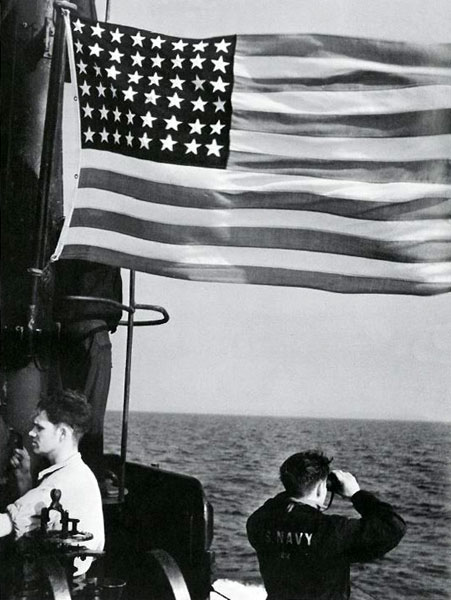
Capelin (SS-289)
Compiled by Paul W. Wittmer and Charles R. Hinman, originally from:
U.S. Submarine Losses World War II, NAVPERS 15,784, 1949 ISSUE
Returning from her first war patrol after only 17 days out, CAPELIN (Cdr. E. E. Marshall) came into Darwin on 16 November 1943 with a defective conning tower hatch mechanism, excessively noisy bow planes, and a defective radar tube. These flaws were corrected to the satisfaction of the Commanding Officer, and the ship then departed for her second patrol on 17 November. Her area was in the Molucca and Celebes Seas, and she was to pay particular attention to Kaoe Bay, Moratai Strait, Davao Gulf and trade routes in the vicinity of Siaoe, Sangi, Talaud and Sarangani Islands. She was to leave her area at dark 6 December.
Nothing was positively heard from CAPELIN after her departure. However BONEFISH reported having seen a U. S. submarine at 1° 14'N, 123° 50'E on 2 December 1943. [Editor's note: According to Clay Blair in Silent Victory, the vessel was positively identified as Capelin. Bonefish sent her a message by sonar and received an acknowledgement.] This position is in the area assigned to CAPELIN at this time. An attempt to reach CAPELIN by radio, on 9 December 1943, elicited no response.

Google Earth image of the general area in which USS Capelin is assumed to have been lost
On 23 November an American submarine was attacked off Kaoe Bay, Halmahera, 1° 34'N, 123° 07'E. However the Japanese state that this attack was broken off, and the evidence of contact was rather thin. The only positive statement which can be made is that CAPELIN was lost in the Celebes Sea, or in Molucca Passage or the Molucca Sea, in December 1943. Enemy minefields are now known to have been placed in various positions along the north coast of Celebes in CAPELIN's area, and she may have been lost because of a mine explosion. In her 17 day first patrol, CAPELIN sank two Japanese medium freighters for 7,400 tons of merchant shipping. This first patrol was conducted among the islands immediately west of New Guinea.

In my case, most of my family members that served were Navy. (Dad was Army). One died in WW2.
His name was Charles DeFreytas. My mothers cousin. He was an Electricians Mate Third Class on the submarine USS Capelin.
In WW2, there were two bases that subs operated out of. One was Pearl Harbor, and the Western Command operated out of Australia. Capelin's first war patrol lasted only 2 weeks, and she returned to Darwin for repairs. 2 days later, she set sail on her second war patrol, and except for a brief sonar contact with the submarine USS Bonefish, was never heard from again. Best guess is she struck a Japanese mine in the Celebes Sea. She was lost with all hands on or about 3 December 1943.
In the Silent Service, submarines that failed to return from patrol were declared "Overdue and presumed lost". They are said to be on Eternal Patrol.
Charles Francis DeFreytas
Rank/Rate Electrician's Mate, Third Class
Service Number 224 32 76
Birth Date August 25, 1923
From Jamaica, New York
Decorations Purple Heart
Submarine USS Capelin (SS-289)
Loss Date December 2, 1943
Location Off Celebes possibly off Kaoe Bay Circumstances Lost at sea, cause unknown
Capelin (SS-289)
Compiled by Paul W. Wittmer and Charles R. Hinman, originally from:
U.S. Submarine Losses World War II, NAVPERS 15,784, 1949 ISSUE
Returning from her first war patrol after only 17 days out, CAPELIN (Cdr. E. E. Marshall) came into Darwin on 16 November 1943 with a defective conning tower hatch mechanism, excessively noisy bow planes, and a defective radar tube. These flaws were corrected to the satisfaction of the Commanding Officer, and the ship then departed for her second patrol on 17 November. Her area was in the Molucca and Celebes Seas, and she was to pay particular attention to Kaoe Bay, Moratai Strait, Davao Gulf and trade routes in the vicinity of Siaoe, Sangi, Talaud and Sarangani Islands. She was to leave her area at dark 6 December.
Nothing was positively heard from CAPELIN after her departure. However BONEFISH reported having seen a U. S. submarine at 1° 14'N, 123° 50'E on 2 December 1943. [Editor's note: According to Clay Blair in Silent Victory, the vessel was positively identified as Capelin. Bonefish sent her a message by sonar and received an acknowledgement.] This position is in the area assigned to CAPELIN at this time. An attempt to reach CAPELIN by radio, on 9 December 1943, elicited no response.
Google Earth image of the general area in which USS Capelin is assumed to have been lost
On 23 November an American submarine was attacked off Kaoe Bay, Halmahera, 1° 34'N, 123° 07'E. However the Japanese state that this attack was broken off, and the evidence of contact was rather thin. The only positive statement which can be made is that CAPELIN was lost in the Celebes Sea, or in Molucca Passage or the Molucca Sea, in December 1943. Enemy minefields are now known to have been placed in various positions along the north coast of Celebes in CAPELIN's area, and she may have been lost because of a mine explosion. In her 17 day first patrol, CAPELIN sank two Japanese medium freighters for 7,400 tons of merchant shipping. This first patrol was conducted among the islands immediately west of New Guinea.
Last edited:


