

Back in my younger days, I was on my states High Power rifle team for 15 years. Competed at the local, state, regional and National level. I got into it initially to qualify to buy an M1 from the DCM. I liked it enough to stay with it. Learned a lot, one of which is that the average rifle owner thinks he can shoot because he knows how to load and fire the rifle and kills a deer every hunting season at some distance they like to think is 200 yards, but is actually 75 or so.
Back in those days, there were no digital cameras, and certainly nothing like the cameras that are in every smart phone today. It was more cumbersome to lug around a 35mm camera and go through the settings prior to taking the photo. So not a great many were taken especially when you had a rifle match to shoot and focus on. But I took more than most.
So here are some of the better ones with an ID so you have an idea of what you're looking at.
Back then, (80's-90's) everyone still shot 30 caliber. While the AR15 was allowed as a Service Rifle, at that time it could not be modified, and there was no aftermarket industry with triggers, match barrels, and float tubes like today. There were also no bullets heavier than about 60grs., so you placed your self at a disadvantage if you tried to shoot one. In time, this all changed.
After my first year and a half in the High Power game, I was invited to go to Camp Perry on the Club team. The state of SC sent two teams to Perry. One was the State Team and the other was the Club Team. After the individual matches, the coach would select the best shooters from both teams to represent the State. The others represented our club. The State Shooting Association paid the entry fees, and the Club paid the housing fees. Both were very modest in those days. The shooters were responsible for transportation, their meals, and whatever goodies you wanted to buy on Commercial Row.
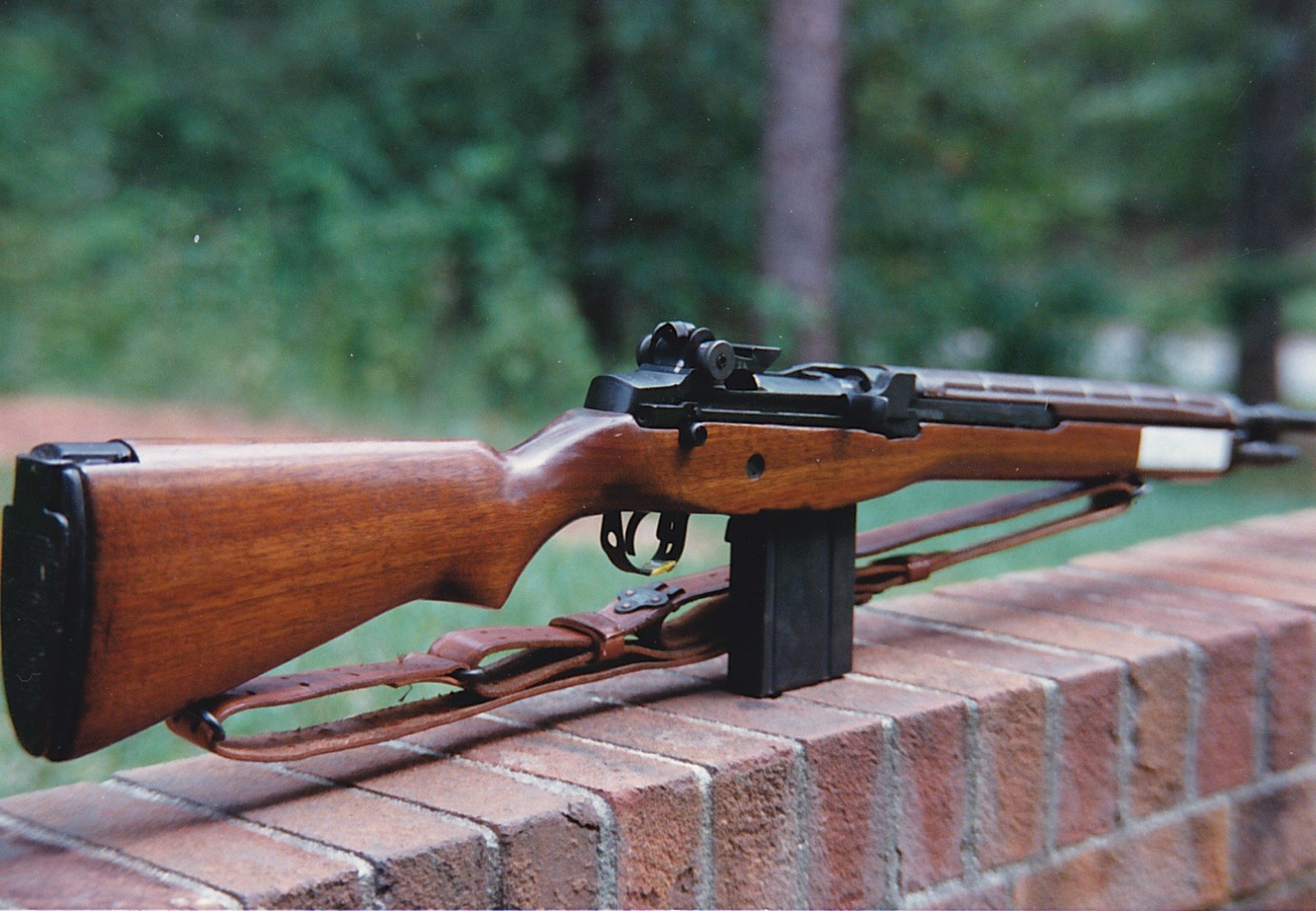
Back then, the State was issued 13 M14NM rifles on loan from the DCM. Mine was made by TRW serial 1453825.
I shot this rifle from 1986 until 1998 wearing out two barrels in the process, after which I transitioned to the AR.
All of my Distinguished points and President's Hundred were earned with this rifle.
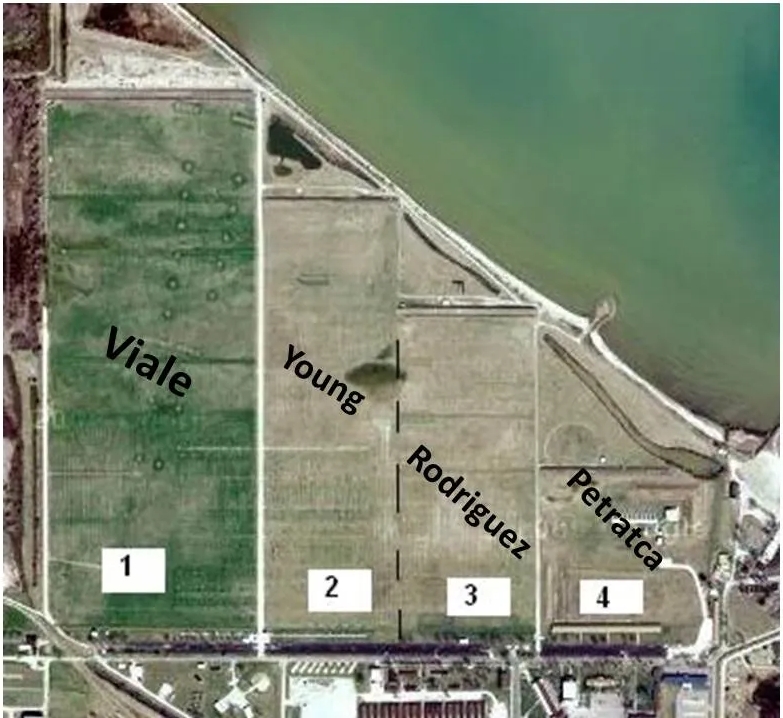
For those that haven't been, going to Camp Perry is the Holy Grail for High Power. Physically, it is the largest rifle range in the world encompassing 1 mile of Lake Erie shoreline.
Viale = 1000yds.
Young = 800yds.
Rodriguez = 600yds.
Petrarca = 300yds.
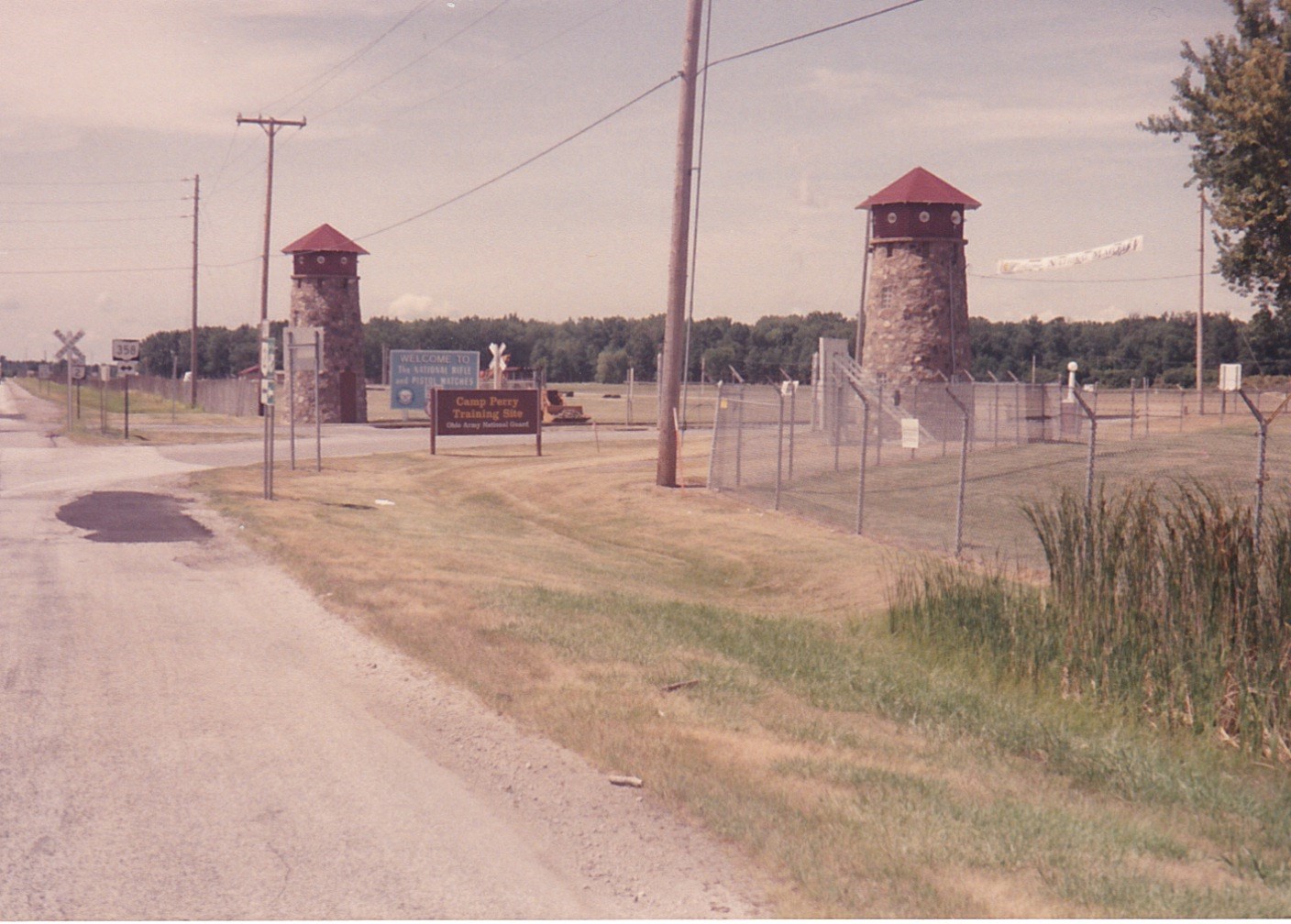
The Main Gate:
Iconic twin towers at the gate.
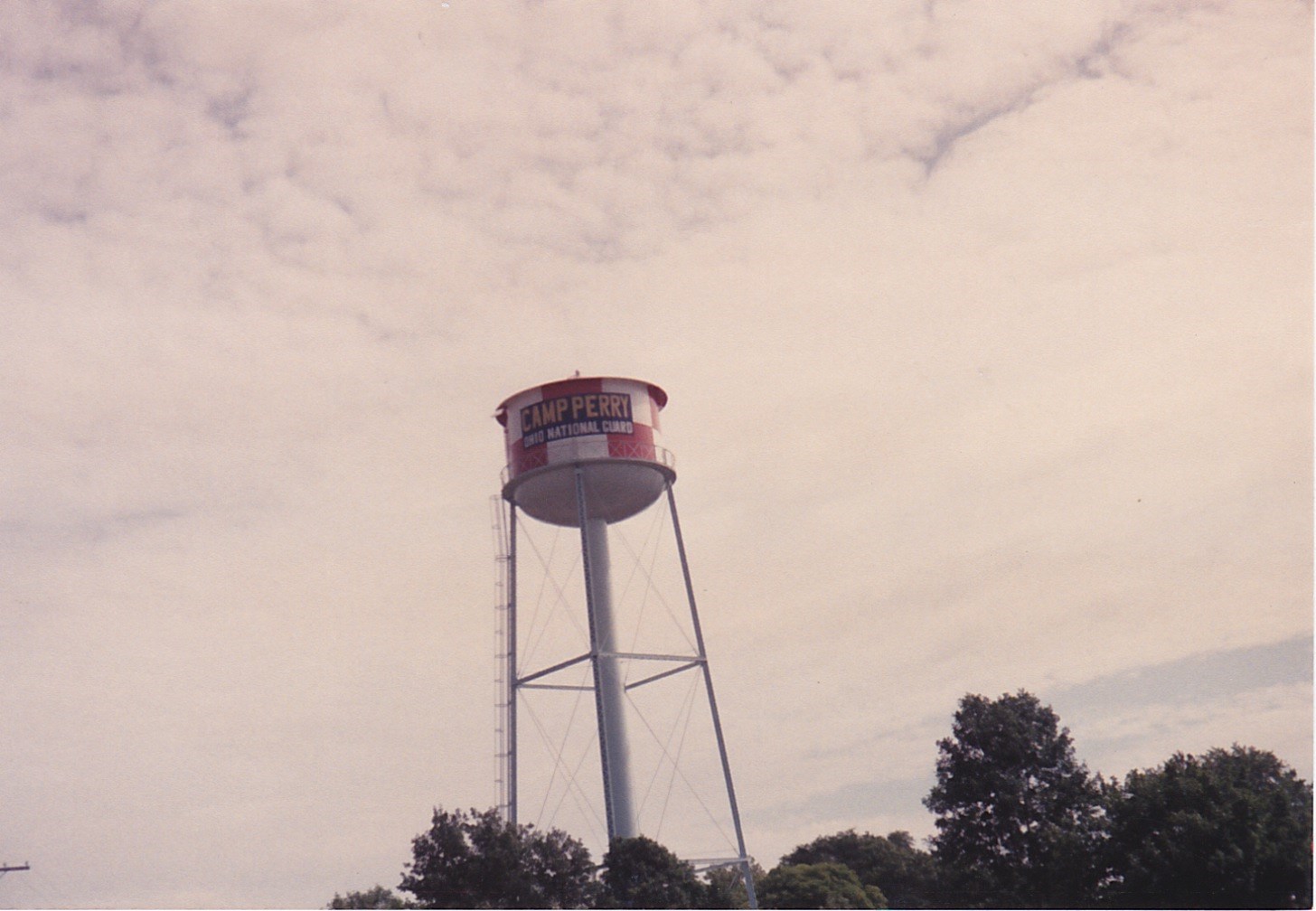
Water tower:
The water tower is also a long standing Camp Perry icon.
Up through the 60's, all four ranges were active during the Nationals. Each range had pit personnel from one of the four branches of service, so there were no pit changes. This ended when the gov't withdrew support and the NRA had to step in and conduct the matches. When I was there in the 80's, Viale and Rodriguez were the two active ranges, each run separately. Later, safety concerns caused them to have the ranges go hot and cold at the same time.
Oh, and the bullets go in the lake. The range became active in 1903, so you can imagine the pile of bullets at the bottom.
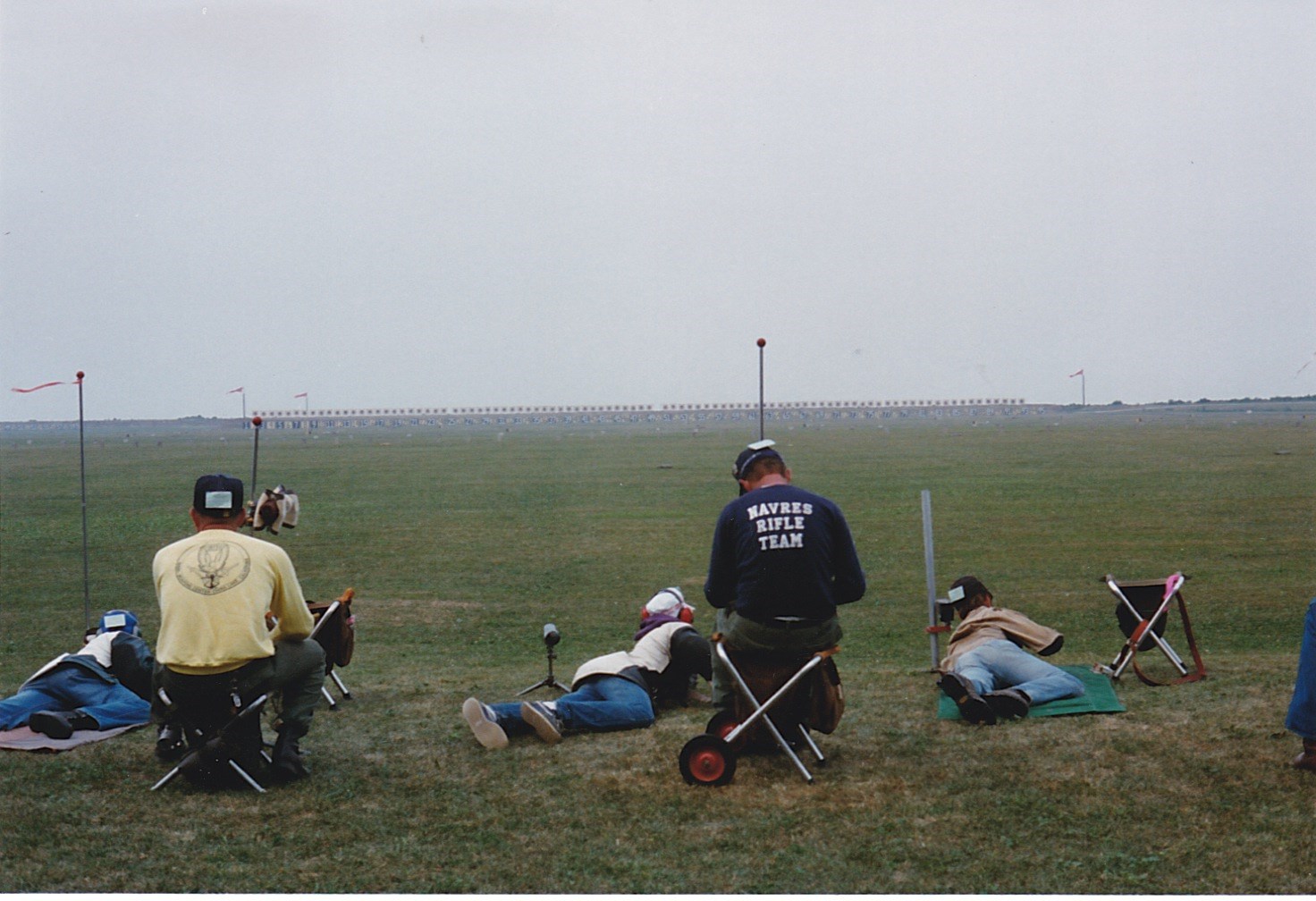
This is the view from the 600yd. line on Viale. 150 targets.
Note the position of the red wind flags in the distance. These flags are huge and the degree to which they stand out from the pole tells you the wind speed. When the bottom edge of the flag is almost perpendicular to the ground as shown here, the wind is approaching 20 m.p.h. With that wind, at that distance, requires a substantial wind correction. I seem to recall that this day required 12 minutes of right wind. For those that are unknowing, that's 6 feet of correction. When viewed through the spotting scope, the bullet would appear to be headed for the target to the right of the intended target, then curve back sharply, much like a golfer who hooks his shot. Reading the wind is everything at Perry.
The Huts:
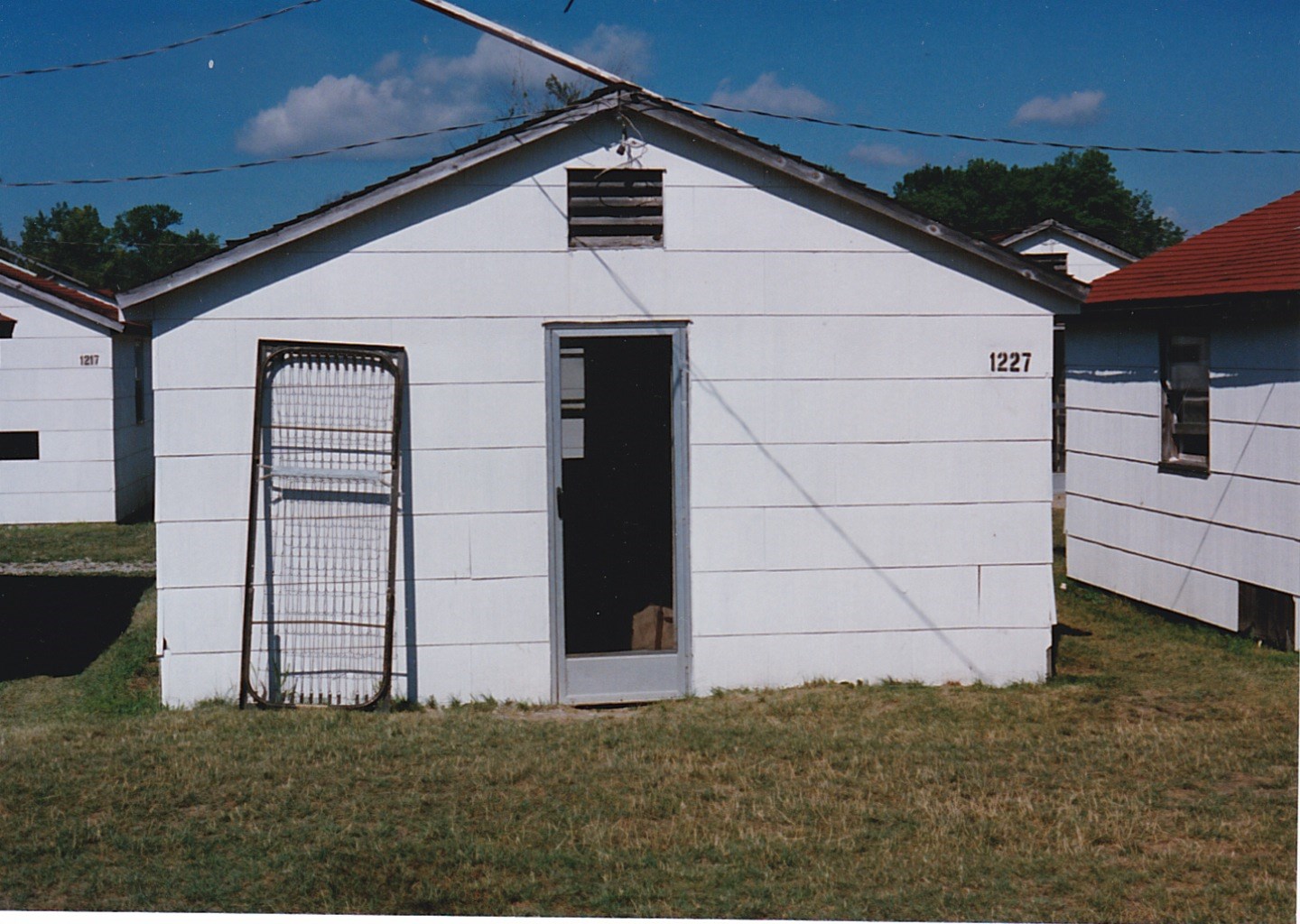
During WW2, Camp Perry was a POW camp for Italian and German prisoners. Pre-War, competitors were housed in tents. Tents were inadequate for Lake Effect weather in the winter months and so the POW's were furnished materials to construct these buildings. At one time they covered most of the available real estate on the property. Now only several dozen remain.
We were housed four men to a hut on Army beds with bedding provided, including 2 each 80 grit Army wool blankets. Being summer, who needs a wool blanket? Those that have been know that the weather in July on Lake Erie can be anything from 50°F to 95°F, or anything in between.
So, four beds, plus all the shooting gear for each person, plus a lawn chair, cooler, coffee maker etc. We all became adept at creative storage techniques. Basically, you were camping without the tent.
The huts had one bare bulb and two 110V 2 prong outlets. All circa 1942. Two of the items in your Camp Perry kit was the old gray adapters so a cord with a ground prong could be plugged in. That and a pack of the old school glass screw in fuses. If you look real hard, you can see the porcelain fuse holder at the peak over the vent grille. If you popped the fuse, you had to climb up on the roof to change it.
The Arcade:
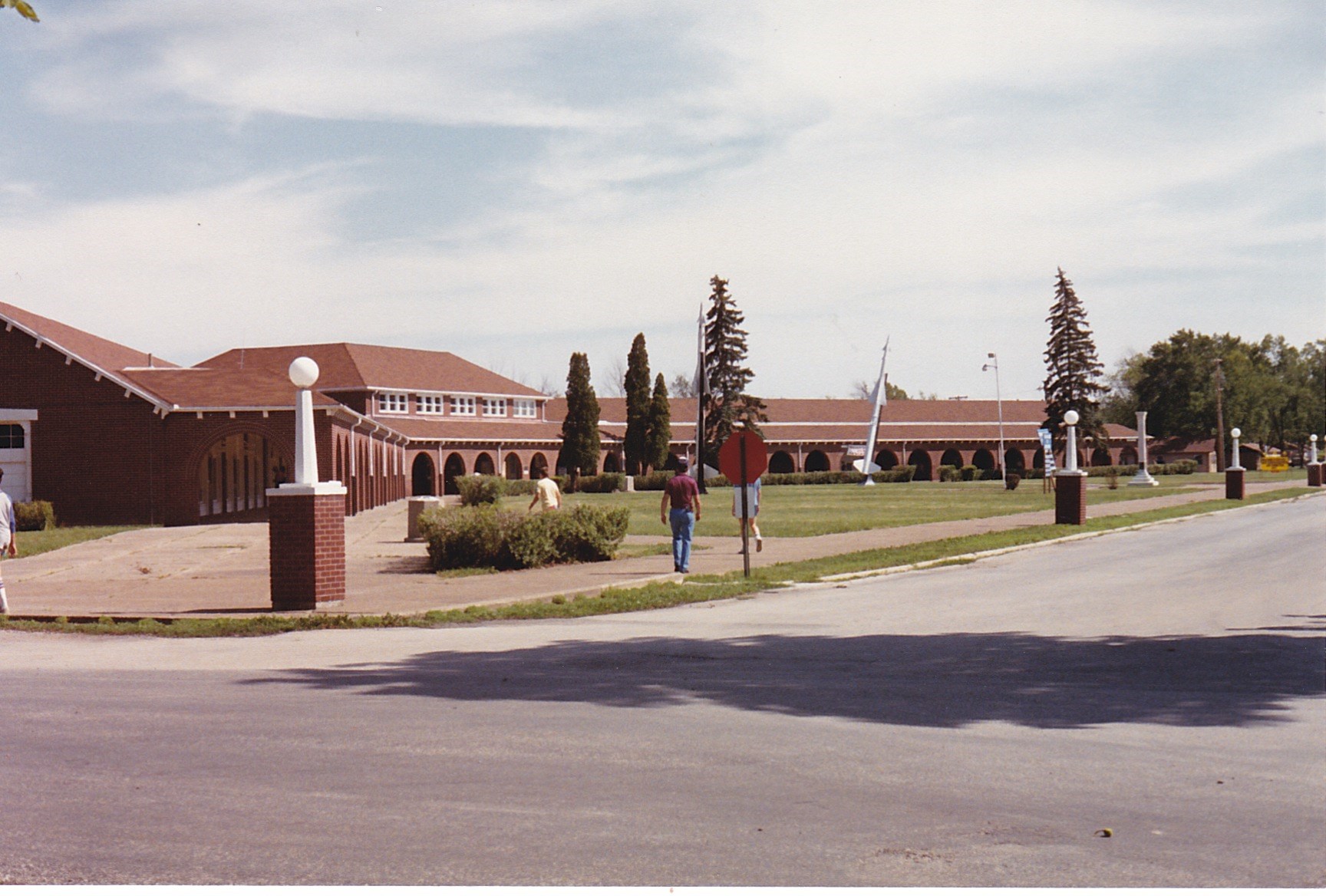
Built in the 1930's, it housed the NRA and DCM offices and trophy room at one end, and the PX and snack bar at the other. There were other various offices in there as well.
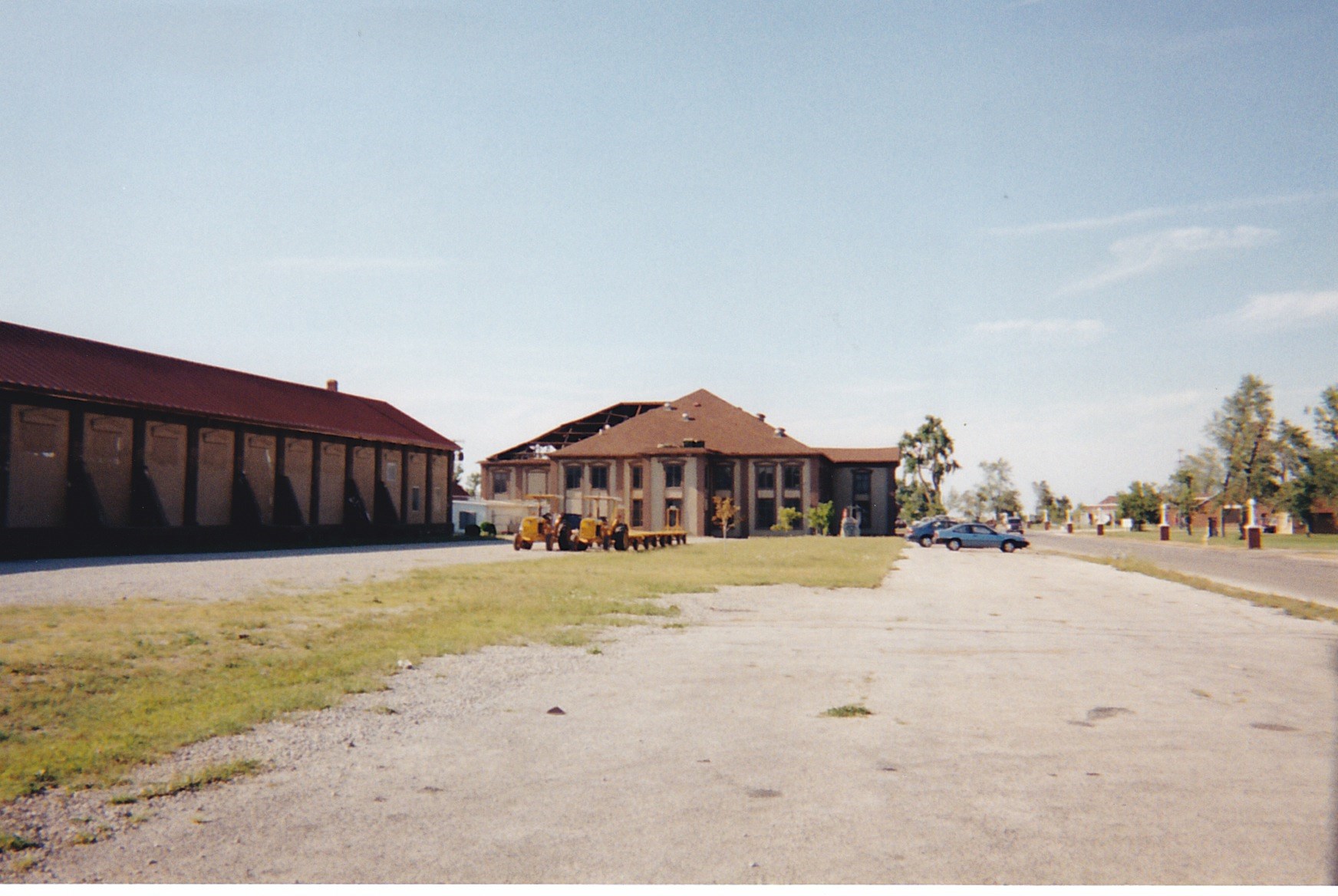
Across from the Arcade was the Mess Hall, also built in the 1930's. A tornado damaged it beyond economic repair in the late 90's and it was demolished. Here it is a year after the tornado with a portion of the roof missing.
The pits:
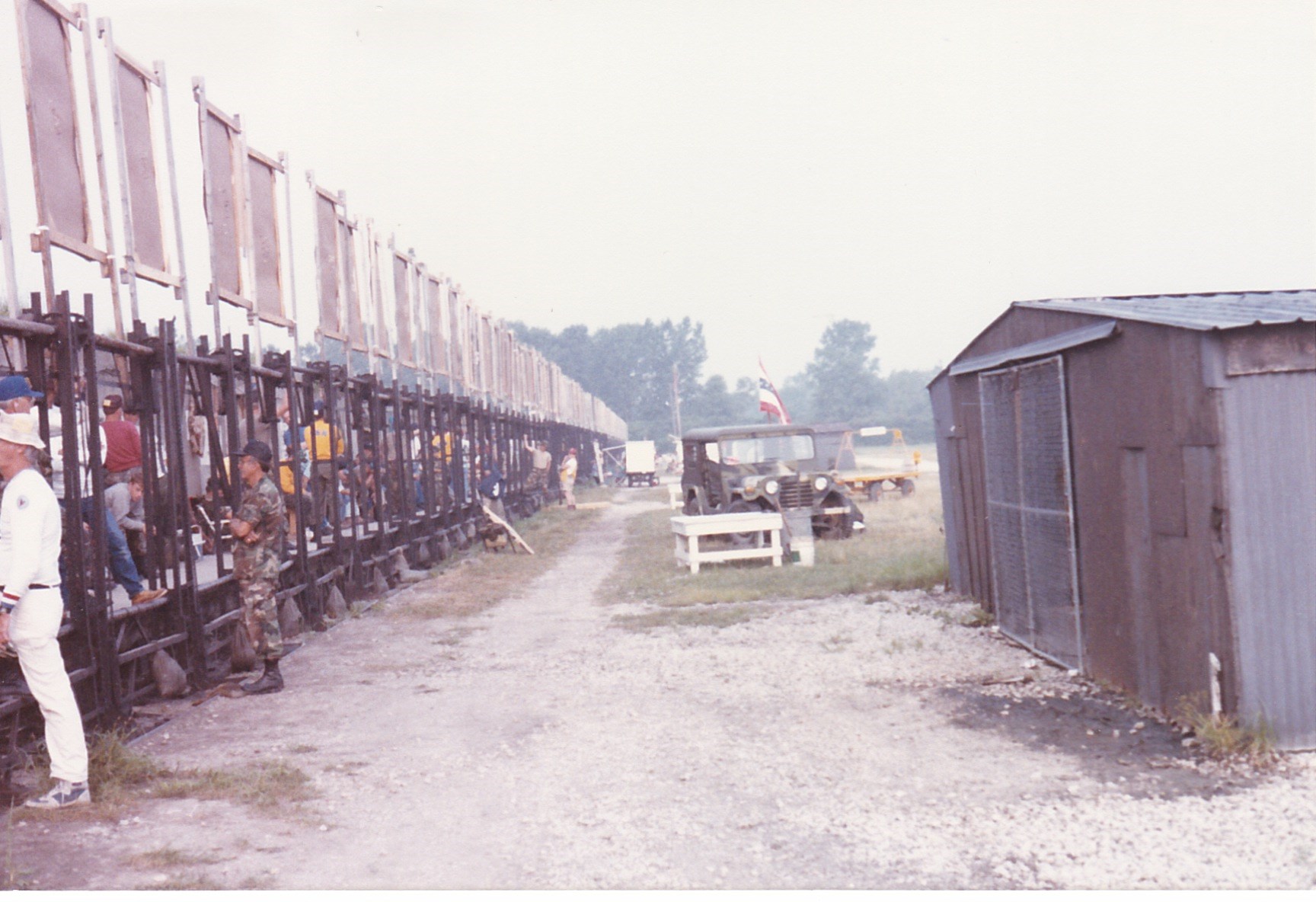
The pits are as old as the range itself, now 120 years. If I'm not mistaken, these target carriers have been there the entire time and still work. Three shooters were assigned to each target. You got a workout running those heavy bastards up and down.
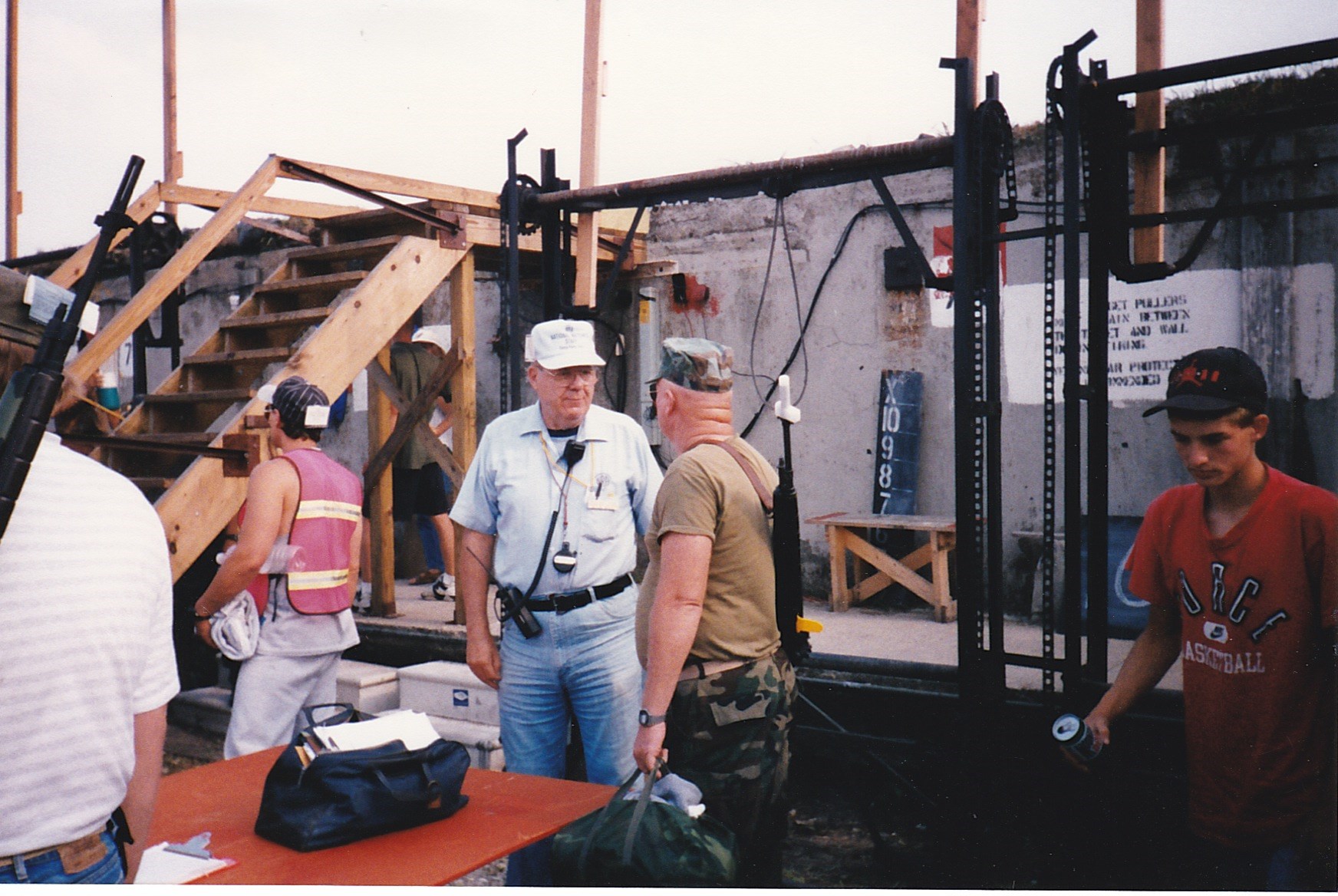
Wallace E. "Rick" York, Chief Pit Officer, National Matches.
Rick rates a thread to himself.
I first met him shortly after he retired from the Marine Corps in 1983 after 40 years service. (Yes, 40 years. He entered the Marine Corps at 17 during WW2)
He showed up at our local High Power match at Ft. Jackson and volunteered to run the match.
When we shot at Ft. Gordon, we could draw barracks and Rick would tell us war stories from WW2 to Vietnam.
He would have us noobs sling up and dry fire out in front of the barracks and conduct a mini shooting clinic. (Can you imagine that now!)
He's gone now, but he had a encyclopedic knowledge of shooting. (He used to be the coach for the Marine Corps team)
Notice the fold down railings on the stairs. Also notice the entire platform and stairs are new.
The year before this pic was taken, Rick was in the pits during the NRA Long Range matches. The stairs used to turn right and exit onto the catwalk, with handrails that were above the parapet at the top.
In a one-in-a-million event, a bullet hit the hand rail and was deflected down into the pits. Rick was sitting on the bottom stair. The bullet entered his cheek, took out some teeth and exited his neck. He left the range in an ambulance. Before shooting resumed, the hand rail was torn down.
No one knew how serious his injuries were.
Turns out, he fought the ER doc to keep him overnight, got bandaged up and checked himself out. Why?
It seems that the Marines have an annual banquet at Camp Perry and it was that night. Rick comes in, big bandage of his face and says...I haven't missed this banquet in over 40 years, and I'm not gonna start now. You can guess the response.
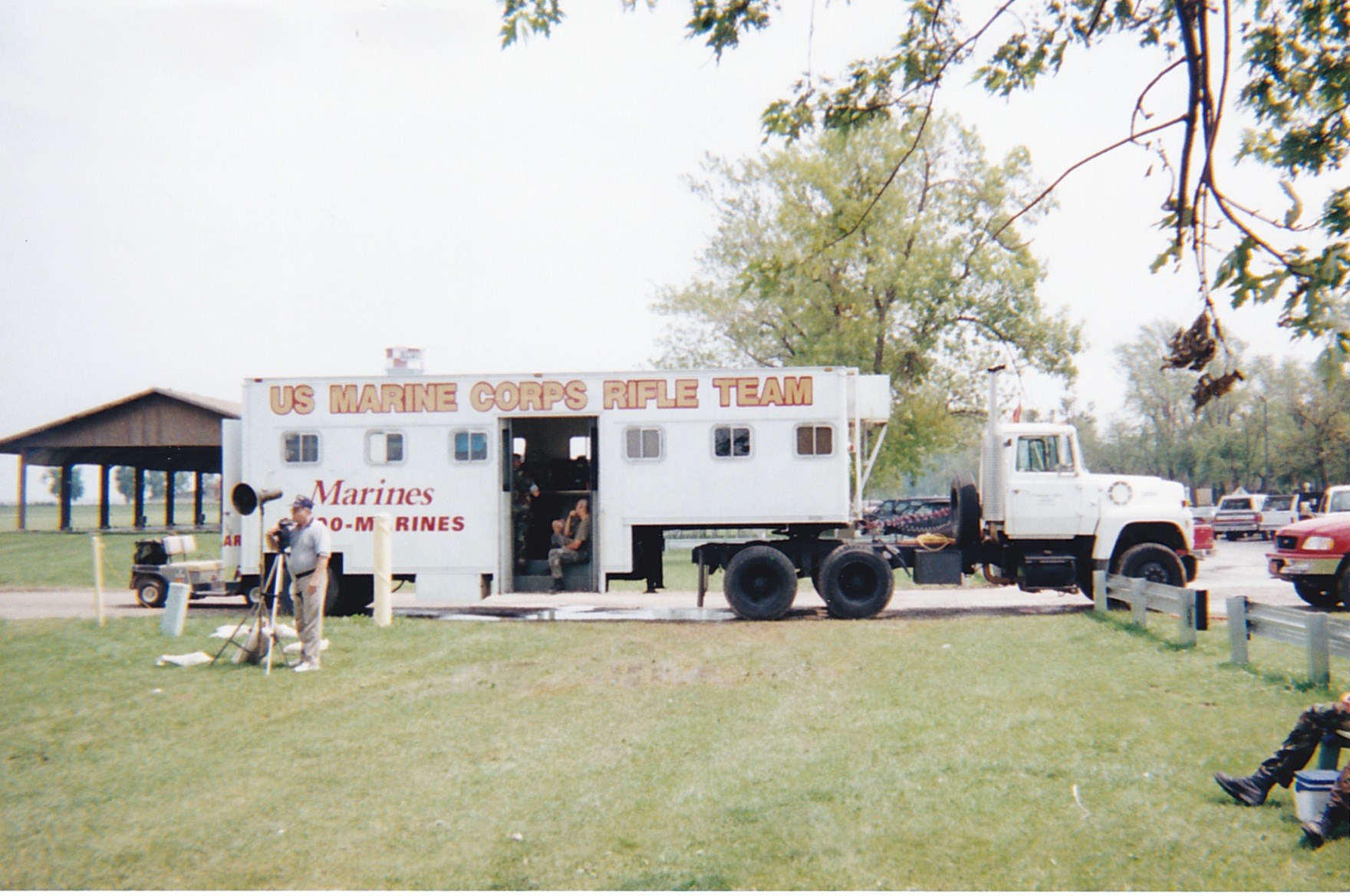
The "Vans":
Each of the services had there own mobile gun smith shop to support their own teams and to help out civilians with a broke rifle.
This is the Marine Corps van.
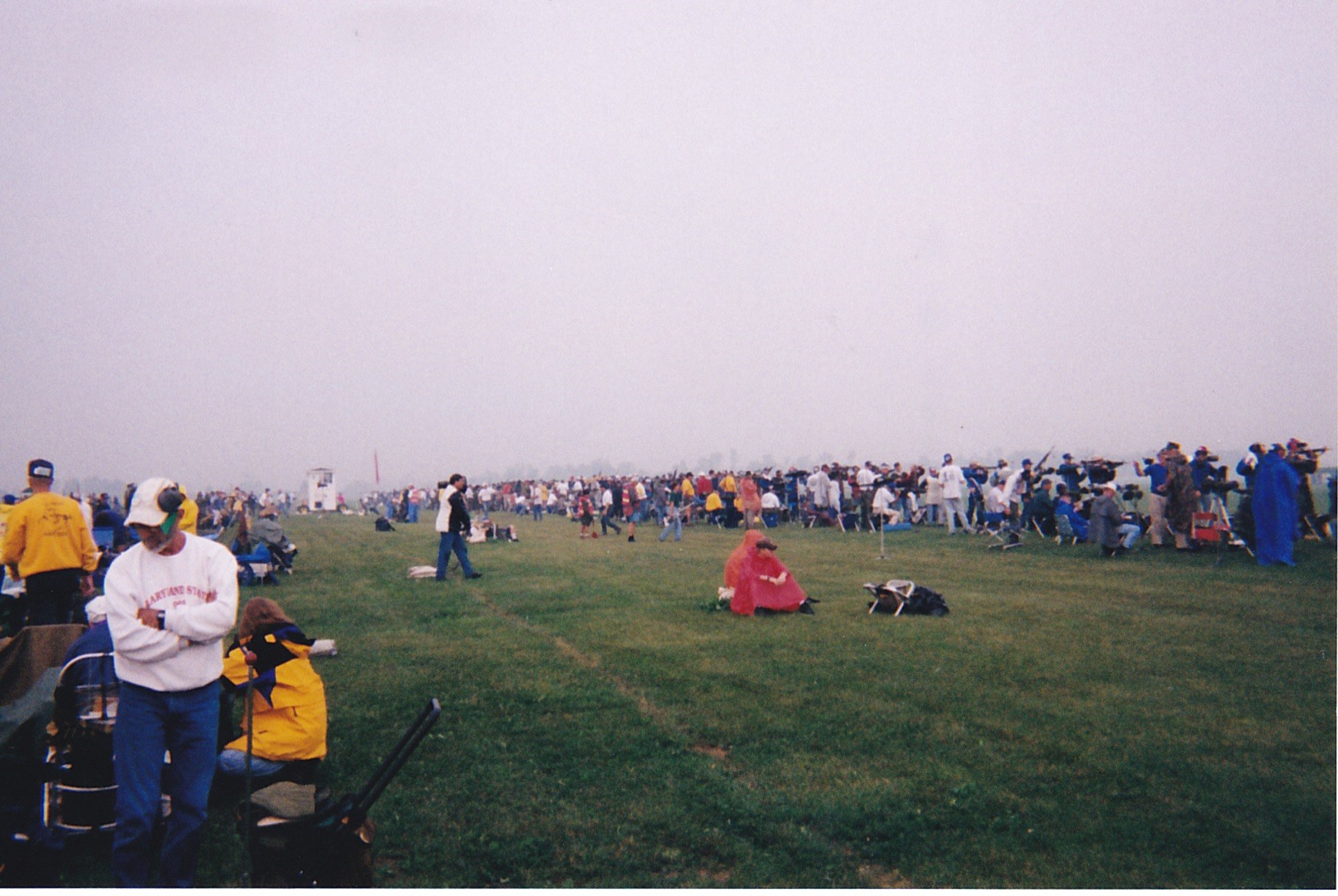
The next to last match of Service Rifle week was the Team Match.
Lake City M852 Match ammo was issued the entire week, and it shot good.
By this point, after shooting all week, I was shooting good and typically turned in my best scores of the week.
All the military teams, reserve teams, National Guard teams and civilian teams turned out. Typically 1500 shooters or so.
For the Marines in the house:
Back in the 80's, we had a club president who was a Marine Vietnam Vet. He contacted Parris Island and asked about them hosting a Regional Championship. The response was positive and we held matches there at two different times.
For you Stanley Kubrick fans, the Film Full Metal Jacket was filmed entirely in England. So those of you who have been on the ranges at P.I. know the range scenes in the film can't be P.I.
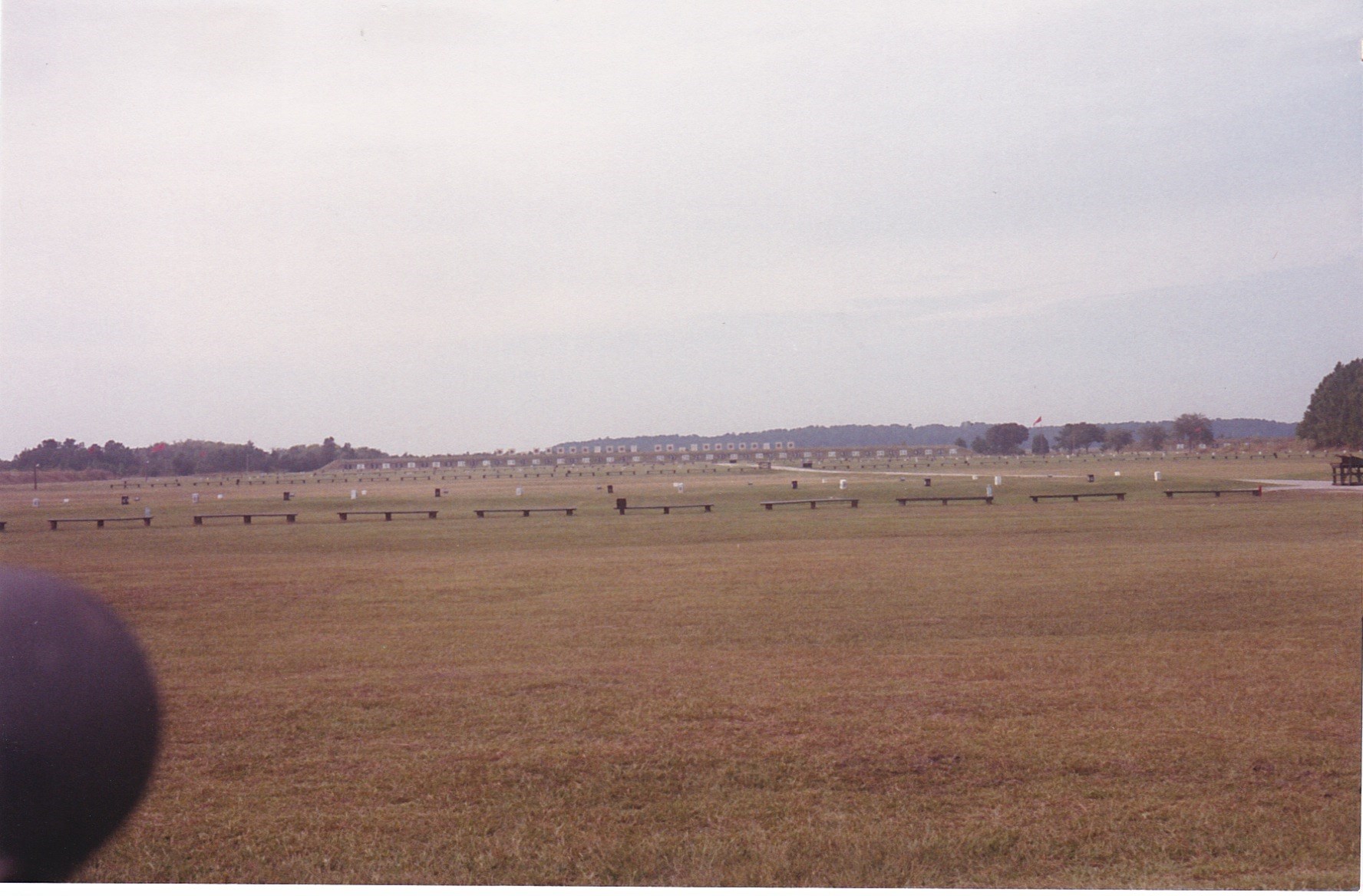
Go back and watch the movie again. This is what the rifle ranges at P.I. look like.
Parris Island Range B.
Camp LeJeune:
In 1993 the NC Rifle and Pistol Association arranged for a week long shooting clinic at Camp Lejeune.
Turned out, they didn't get enough bodies to fill all the available slots and offered IIRC 8 slots to SC. I got one of them.
The Marines provided everything but chow. Mess Sgt. wouldn't allow lowly civilians in his Mess Hall. No biggie, Hardee's was right down the road for breakfast.
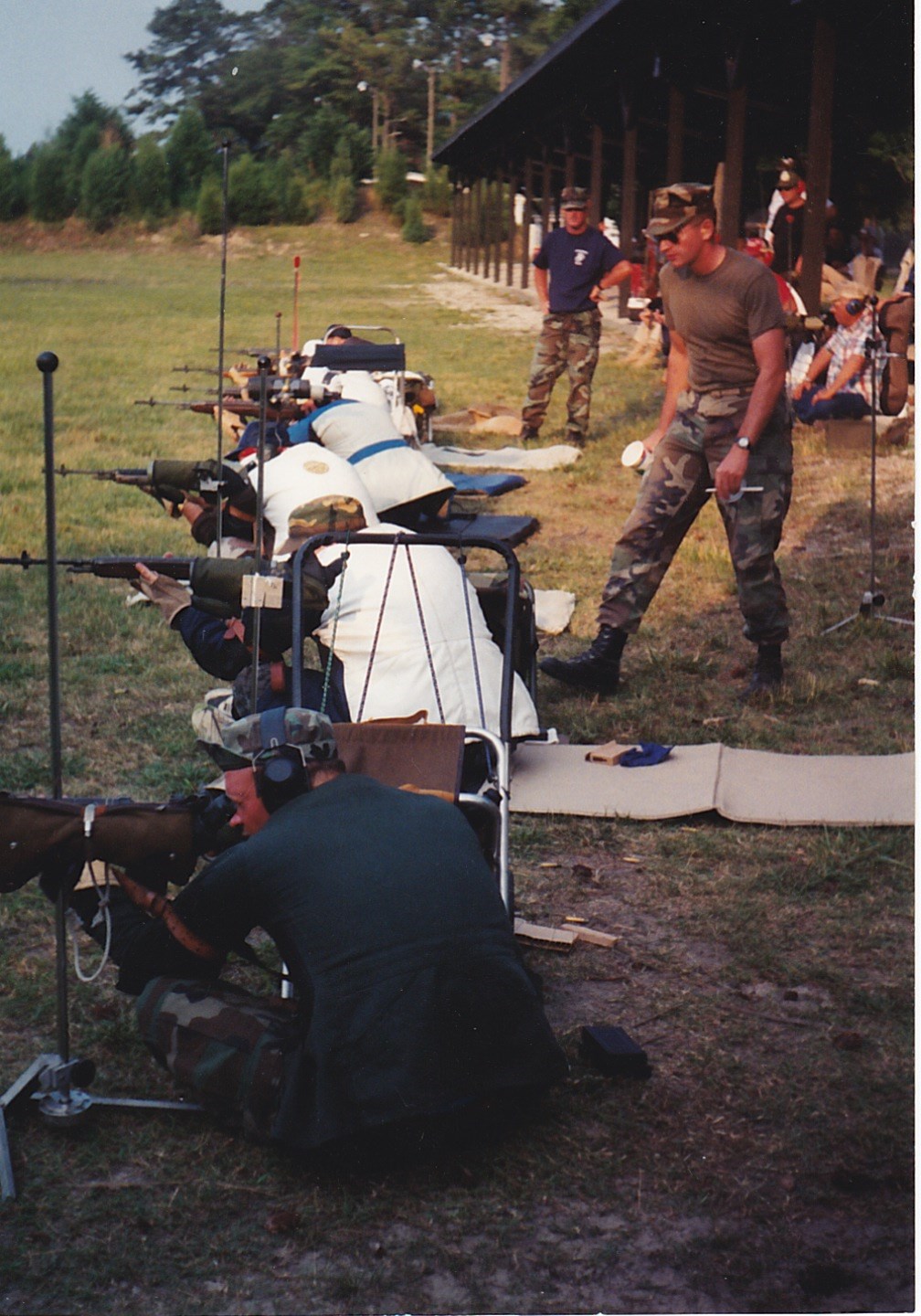
Shot all week and learned a lot. The individual coaching by Marine coaches brought my off hand game up by 10 points.
Here Cpl. Posey conducts class on the line.
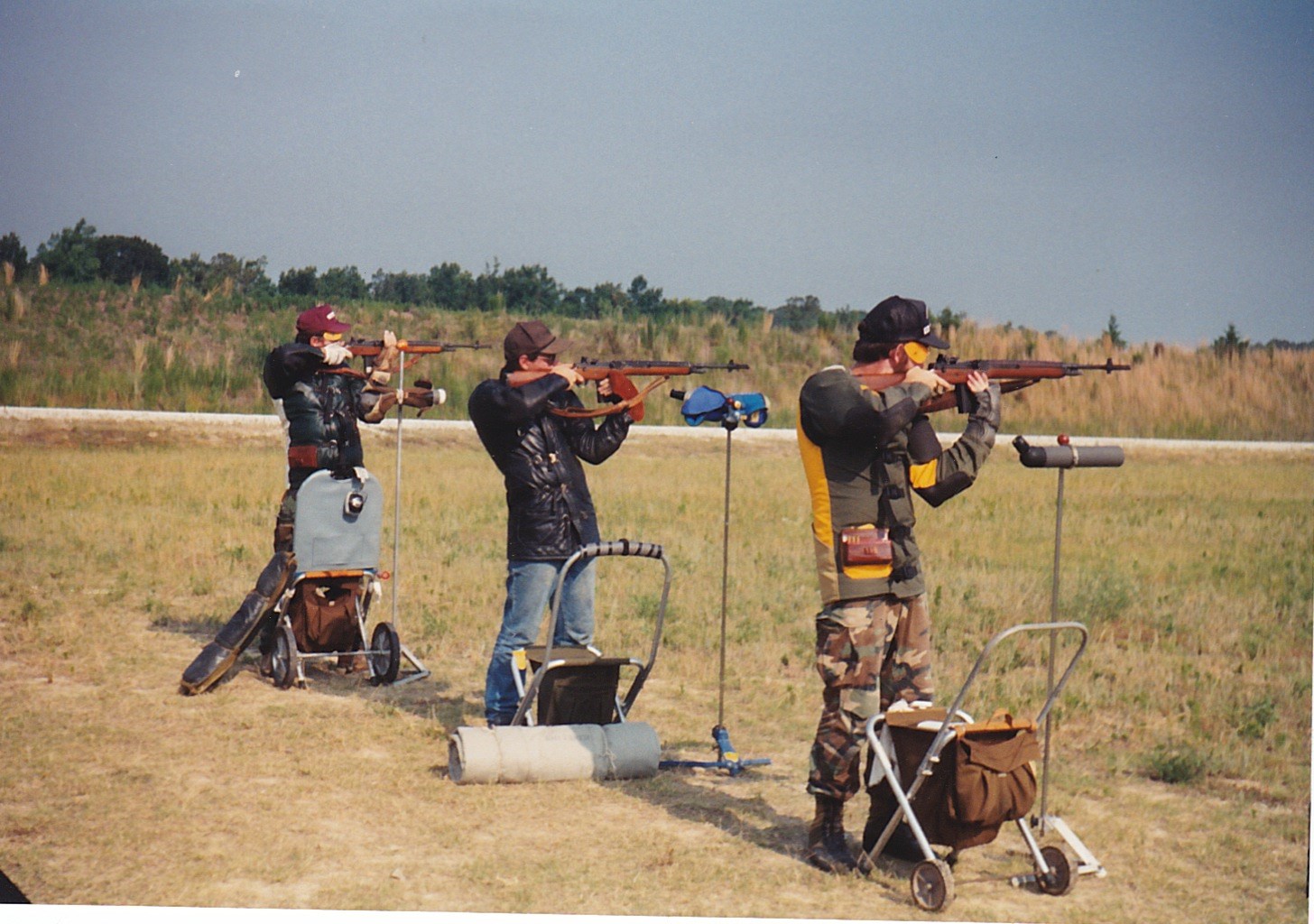
After all the class work, we moved over to Range D (now Hathcock Range) to shoot across the course.
That's me on the right.
The lessons learned during this clinic gave me what I needed to get that hard leg at Perry that summer. That put me "out" and I became Distinguished.
A couple years later I squeaked in at # 93 to make the cut for Presidents Hundred.
Oak Ridge:
Oak Ridge is where R&D for the Manhattan Project took place. Oak Ridge developed the uranium bomb, while Hanford, WA developed the plutonium bomb.
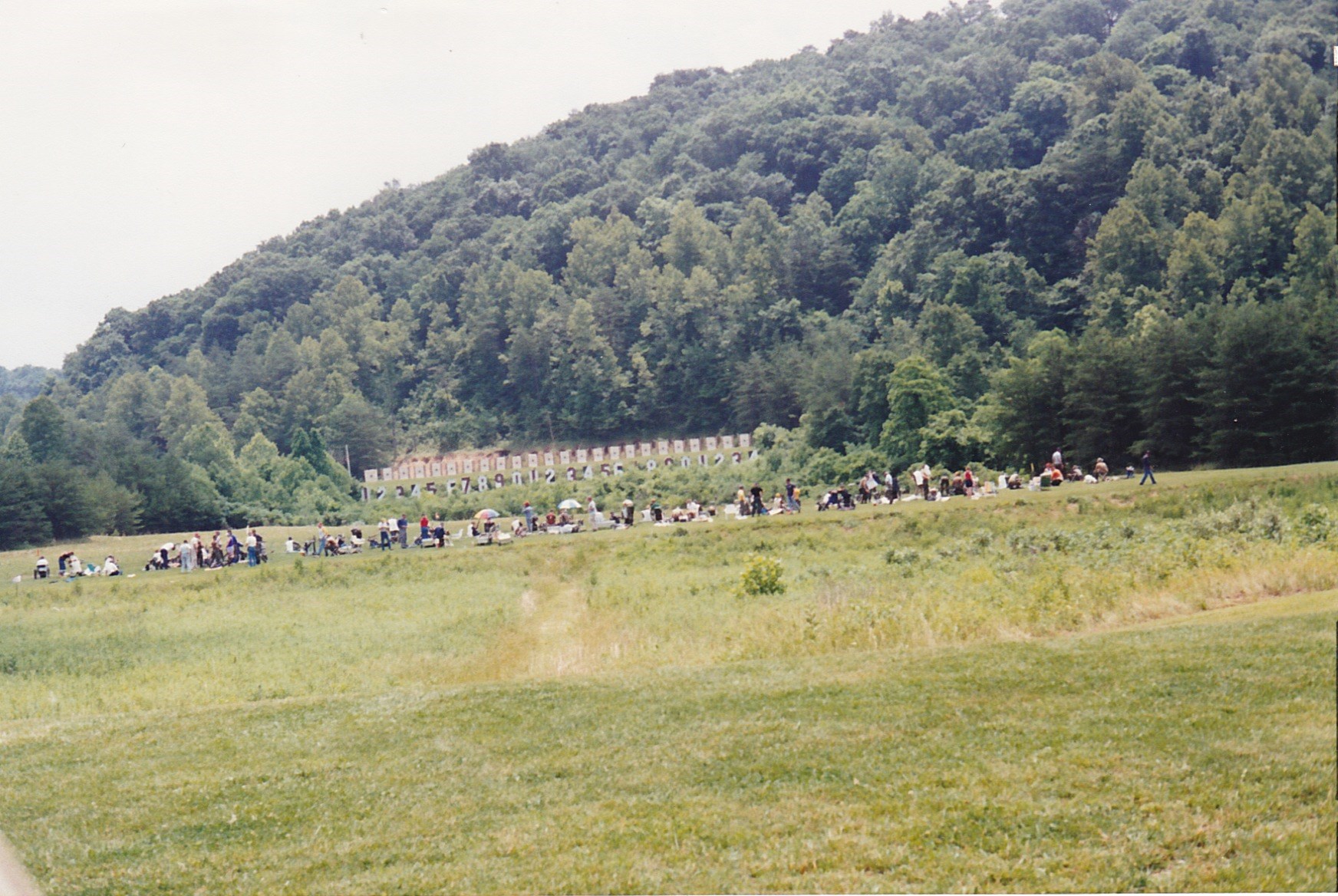
Each year in June, the Oak Ridge Sportsman Association hosted a Regional match there. The 1000yd. range with cantilever targets was perfect for the event, and I attend for many years.
Shooters on the 200yd. line as viewed from the 300 yd. line.
So when I learned about the Regional there, I was interested. I was chasing leg points at the time and Excellence in Competition matches, known as Leg Matches are only held in conjunction with a State Championship, or Regional Championship, plus Camp Perry. So it was important to try and shoot these matches on your journey to Distinguished as you could only shoot four of these matches per year.
When I mentioned to Rick York I was going to Oak Ridge, he said matter of factly... "You need to go by Big Ed's and tell him I said Hi." No explanation was given.
So when I got to Oak Ridge, I ask around about who this Big Ed guy is. Turns out, he owns a local Pizzeria, and opens up on Sunday after the match for free pizza and beer to all the competitors. Lots of Marine Corps shooting team memorabilia displayed. (We were told to help Big Ed out and buy a hat or tee shirt to help offset the cost of the free pizza and beer.)
So I'm at the register paying for my hat and tee shirt and I tell Big Ed Rick York said to tell you Hi when I was here. Deadpan as fuck, he says, "Yeah, me and Rick were on Iwo together".
Ed's gone now as well, but his son has continued the tradition of pizza and beer after the match.
Well, that's enough for today. Hard to believe how good we had it back then. Camp Perry is a fond memory of my shooting team days. I am very proud of the Distinguished Badge and President Hundred tab that are represented in my avatar. Not many can claim both awards. Distinguished badges are numbered on the back to correspond to the number that have been awarded.
The letter I received with my badge in 1993 reads thus:
"You are the 1083th civilian to receive this award since the Distinguished program was started in 1892."
In the year I earned mine, there were 209 shooters total that earned Distinguished.
You can learn more about the history of the Distinguished program here...
Back in those days, there were no digital cameras, and certainly nothing like the cameras that are in every smart phone today. It was more cumbersome to lug around a 35mm camera and go through the settings prior to taking the photo. So not a great many were taken especially when you had a rifle match to shoot and focus on. But I took more than most.
So here are some of the better ones with an ID so you have an idea of what you're looking at.
Back then, (80's-90's) everyone still shot 30 caliber. While the AR15 was allowed as a Service Rifle, at that time it could not be modified, and there was no aftermarket industry with triggers, match barrels, and float tubes like today. There were also no bullets heavier than about 60grs., so you placed your self at a disadvantage if you tried to shoot one. In time, this all changed.
After my first year and a half in the High Power game, I was invited to go to Camp Perry on the Club team. The state of SC sent two teams to Perry. One was the State Team and the other was the Club Team. After the individual matches, the coach would select the best shooters from both teams to represent the State. The others represented our club. The State Shooting Association paid the entry fees, and the Club paid the housing fees. Both were very modest in those days. The shooters were responsible for transportation, their meals, and whatever goodies you wanted to buy on Commercial Row.
Back then, the State was issued 13 M14NM rifles on loan from the DCM. Mine was made by TRW serial 1453825.
I shot this rifle from 1986 until 1998 wearing out two barrels in the process, after which I transitioned to the AR.
All of my Distinguished points and President's Hundred were earned with this rifle.
For those that haven't been, going to Camp Perry is the Holy Grail for High Power. Physically, it is the largest rifle range in the world encompassing 1 mile of Lake Erie shoreline.
Viale = 1000yds.
Young = 800yds.
Rodriguez = 600yds.
Petrarca = 300yds.
The Main Gate:
Iconic twin towers at the gate.
Water tower:
The water tower is also a long standing Camp Perry icon.
Up through the 60's, all four ranges were active during the Nationals. Each range had pit personnel from one of the four branches of service, so there were no pit changes. This ended when the gov't withdrew support and the NRA had to step in and conduct the matches. When I was there in the 80's, Viale and Rodriguez were the two active ranges, each run separately. Later, safety concerns caused them to have the ranges go hot and cold at the same time.
Oh, and the bullets go in the lake. The range became active in 1903, so you can imagine the pile of bullets at the bottom.
This is the view from the 600yd. line on Viale. 150 targets.
Note the position of the red wind flags in the distance. These flags are huge and the degree to which they stand out from the pole tells you the wind speed. When the bottom edge of the flag is almost perpendicular to the ground as shown here, the wind is approaching 20 m.p.h. With that wind, at that distance, requires a substantial wind correction. I seem to recall that this day required 12 minutes of right wind. For those that are unknowing, that's 6 feet of correction. When viewed through the spotting scope, the bullet would appear to be headed for the target to the right of the intended target, then curve back sharply, much like a golfer who hooks his shot. Reading the wind is everything at Perry.
The Huts:
During WW2, Camp Perry was a POW camp for Italian and German prisoners. Pre-War, competitors were housed in tents. Tents were inadequate for Lake Effect weather in the winter months and so the POW's were furnished materials to construct these buildings. At one time they covered most of the available real estate on the property. Now only several dozen remain.
We were housed four men to a hut on Army beds with bedding provided, including 2 each 80 grit Army wool blankets. Being summer, who needs a wool blanket? Those that have been know that the weather in July on Lake Erie can be anything from 50°F to 95°F, or anything in between.
So, four beds, plus all the shooting gear for each person, plus a lawn chair, cooler, coffee maker etc. We all became adept at creative storage techniques. Basically, you were camping without the tent.
The huts had one bare bulb and two 110V 2 prong outlets. All circa 1942. Two of the items in your Camp Perry kit was the old gray adapters so a cord with a ground prong could be plugged in. That and a pack of the old school glass screw in fuses. If you look real hard, you can see the porcelain fuse holder at the peak over the vent grille. If you popped the fuse, you had to climb up on the roof to change it.
The Arcade:
Built in the 1930's, it housed the NRA and DCM offices and trophy room at one end, and the PX and snack bar at the other. There were other various offices in there as well.
Across from the Arcade was the Mess Hall, also built in the 1930's. A tornado damaged it beyond economic repair in the late 90's and it was demolished. Here it is a year after the tornado with a portion of the roof missing.
The pits:
The pits are as old as the range itself, now 120 years. If I'm not mistaken, these target carriers have been there the entire time and still work. Three shooters were assigned to each target. You got a workout running those heavy bastards up and down.
Wallace E. "Rick" York, Chief Pit Officer, National Matches.
Rick rates a thread to himself.
I first met him shortly after he retired from the Marine Corps in 1983 after 40 years service. (Yes, 40 years. He entered the Marine Corps at 17 during WW2)
He showed up at our local High Power match at Ft. Jackson and volunteered to run the match.
When we shot at Ft. Gordon, we could draw barracks and Rick would tell us war stories from WW2 to Vietnam.
He would have us noobs sling up and dry fire out in front of the barracks and conduct a mini shooting clinic. (Can you imagine that now!)
He's gone now, but he had a encyclopedic knowledge of shooting. (He used to be the coach for the Marine Corps team)
Notice the fold down railings on the stairs. Also notice the entire platform and stairs are new.
The year before this pic was taken, Rick was in the pits during the NRA Long Range matches. The stairs used to turn right and exit onto the catwalk, with handrails that were above the parapet at the top.
In a one-in-a-million event, a bullet hit the hand rail and was deflected down into the pits. Rick was sitting on the bottom stair. The bullet entered his cheek, took out some teeth and exited his neck. He left the range in an ambulance. Before shooting resumed, the hand rail was torn down.
No one knew how serious his injuries were.
Turns out, he fought the ER doc to keep him overnight, got bandaged up and checked himself out. Why?
It seems that the Marines have an annual banquet at Camp Perry and it was that night. Rick comes in, big bandage of his face and says...I haven't missed this banquet in over 40 years, and I'm not gonna start now. You can guess the response.
The "Vans":
Each of the services had there own mobile gun smith shop to support their own teams and to help out civilians with a broke rifle.
This is the Marine Corps van.
The next to last match of Service Rifle week was the Team Match.
Lake City M852 Match ammo was issued the entire week, and it shot good.
By this point, after shooting all week, I was shooting good and typically turned in my best scores of the week.
All the military teams, reserve teams, National Guard teams and civilian teams turned out. Typically 1500 shooters or so.
For the Marines in the house:
Back in the 80's, we had a club president who was a Marine Vietnam Vet. He contacted Parris Island and asked about them hosting a Regional Championship. The response was positive and we held matches there at two different times.
For you Stanley Kubrick fans, the Film Full Metal Jacket was filmed entirely in England. So those of you who have been on the ranges at P.I. know the range scenes in the film can't be P.I.
Go back and watch the movie again. This is what the rifle ranges at P.I. look like.
Parris Island Range B.
Camp LeJeune:
In 1993 the NC Rifle and Pistol Association arranged for a week long shooting clinic at Camp Lejeune.
Turned out, they didn't get enough bodies to fill all the available slots and offered IIRC 8 slots to SC. I got one of them.
The Marines provided everything but chow. Mess Sgt. wouldn't allow lowly civilians in his Mess Hall. No biggie, Hardee's was right down the road for breakfast.
Shot all week and learned a lot. The individual coaching by Marine coaches brought my off hand game up by 10 points.
Here Cpl. Posey conducts class on the line.
After all the class work, we moved over to Range D (now Hathcock Range) to shoot across the course.
That's me on the right.
The lessons learned during this clinic gave me what I needed to get that hard leg at Perry that summer. That put me "out" and I became Distinguished.
A couple years later I squeaked in at # 93 to make the cut for Presidents Hundred.
Oak Ridge:
Oak Ridge is where R&D for the Manhattan Project took place. Oak Ridge developed the uranium bomb, while Hanford, WA developed the plutonium bomb.
Each year in June, the Oak Ridge Sportsman Association hosted a Regional match there. The 1000yd. range with cantilever targets was perfect for the event, and I attend for many years.
Shooters on the 200yd. line as viewed from the 300 yd. line.
So when I learned about the Regional there, I was interested. I was chasing leg points at the time and Excellence in Competition matches, known as Leg Matches are only held in conjunction with a State Championship, or Regional Championship, plus Camp Perry. So it was important to try and shoot these matches on your journey to Distinguished as you could only shoot four of these matches per year.
When I mentioned to Rick York I was going to Oak Ridge, he said matter of factly... "You need to go by Big Ed's and tell him I said Hi." No explanation was given.
So when I got to Oak Ridge, I ask around about who this Big Ed guy is. Turns out, he owns a local Pizzeria, and opens up on Sunday after the match for free pizza and beer to all the competitors. Lots of Marine Corps shooting team memorabilia displayed. (We were told to help Big Ed out and buy a hat or tee shirt to help offset the cost of the free pizza and beer.)
So I'm at the register paying for my hat and tee shirt and I tell Big Ed Rick York said to tell you Hi when I was here. Deadpan as fuck, he says, "Yeah, me and Rick were on Iwo together".
Ed's gone now as well, but his son has continued the tradition of pizza and beer after the match.
Well, that's enough for today. Hard to believe how good we had it back then. Camp Perry is a fond memory of my shooting team days. I am very proud of the Distinguished Badge and President Hundred tab that are represented in my avatar. Not many can claim both awards. Distinguished badges are numbered on the back to correspond to the number that have been awarded.
The letter I received with my badge in 1993 reads thus:
"You are the 1083th civilian to receive this award since the Distinguished program was started in 1892."
In the year I earned mine, there were 209 shooters total that earned Distinguished.
You can learn more about the history of the Distinguished program here...
Last edited:


